
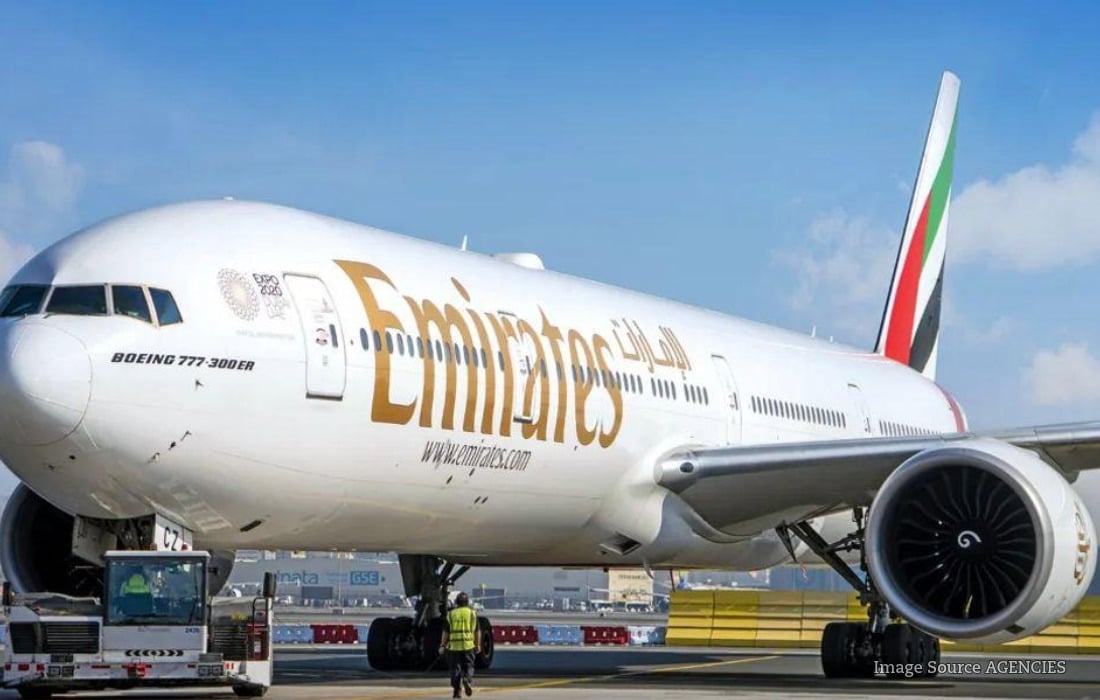
Emirates Group reports AED 3.6 billion ($980 million) in half-year net profit despite regional conflict and rising fuel costs. Revenue reaches AED 66.2 billion
DUBAI: Emirates Group reported a net profit of AED 3.6 billion ($980 million) for the first half of its 2026–27 financial year. The Dubai-based aviation group remained profitable despite regional airspace disruptions, reduced passenger traffic and higher fuel costs.
The group announced its results on November 5 for the six months ending September 30, 2026. However, net profit fell 66% compared with the same period last year. Revenue declined 12% to AED 66.2 billion ($18 billion).
Emirates Airline Faces Higher Fuel Costs
Emirates airline recorded AED 3.3 billion ($903 million) in net profit, down 66% year-on-year. Revenue fell 13% to AED 56.9 billion. The airline carried 21.8 million passengers, representing a 22% decline. Regional airspace restrictions disrupted flight schedules and affected travel demand.
Higher fuel prices also increased operating expenses. However, strong demand for premium cabins and cargo services supported revenue. By September 30, Emirates had restored 91% of its pre-disruption network, serving 150 airports across 78 countries and territories.
Cargo Operations Support Revenue
Emirates SkyCargo transported 1.2 million tonnes of cargo during the six-month period. Although volumes declined slightly, cargo revenue increased 52%. Limited air freight capacity and maritime shipping disruptions strengthened demand. Meanwhile, dnata reported AED 309 million in net profit, down 56% from the previous year.
Emirates Group Maintains Strong Cash Reserves
The group ended September with AED 54.1 billion in cash reserves. Sheikh Ahmed bin Saeed Al Maktoum, Chairman and Chief Executive of Emirates Airline and Group, highlighted the company’s resilience despite difficult market conditions. Emirates and dnata continue investing in aircraft, services and operational capabilities to support future growth.
Impact to Expect
Emirates Group’s performance highlights the financial pressure facing regional aviation. Strong cargo demand and cash reserves support its recovery plans. However, high fuel prices and regional uncertainty could continue affecting passenger traffic, profitability and expansion.
