
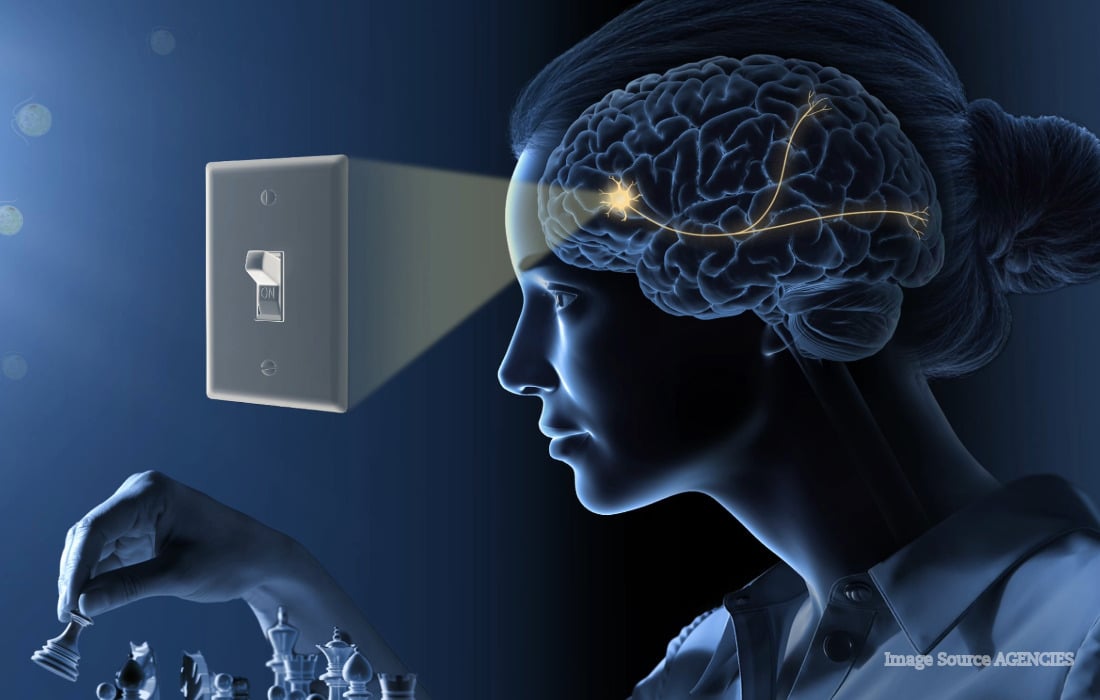
Karl Deisseroth, Peter Hegemann and Georg Nagel have won the 2026 Nobel Prize in Physiology or Medicine for discoveries that led to optogenetics, a technique that allows scientists to control specific nerve cells using light.
The 2026 Nobel Prize in Physiology or Medicine has been awarded jointly to Karl Deisseroth, Peter Hegemann and Georg Nagel for pioneering discoveries involving light-gated ion channels and the development of optogenetics.
The Nobel Assembly at Karolinska Institutet said their work transformed neuroscience by giving researchers a highly precise way to activate or silence selected nerve cells with light.
What is optogenetics?
Optogenetics combines genetics and light to control the activity of individual cells, particularly neurons.
A key breakthrough came from the study of channelrhodopsins, light-sensitive proteins originally identified in microorganisms such as algae. Researchers discovered that these proteins could be introduced into nerve cells, effectively creating light-controlled switches.
When illuminated with particular wavelengths of light, the modified neurons can be switched on or off.
From algae to neuroscience breakthrough
Hegemann and Nagel’s work helped establish the properties and potential of channelrhodopsins, while Deisseroth and colleagues subsequently demonstrated how these molecular tools could be used to manipulate neural activity with extraordinary precision.
The technique was demonstrated in human cells in 2003 and later applied to rat neurons in 2005, helping establish optogenetics as one of modern neuroscience’s most important experimental tools.
Understanding how the brain works
Optogenetics has allowed scientists to investigate neural circuits involved in movement, learning, memory, fear, addiction and behaviour.
Researchers can selectively activate particular groups of brain cells and observe the resulting changes, giving them a clearer understanding of how different neural networks contribute to behaviour and disease.
The technology is also being investigated for conditions including Parkinson’s disease, epilepsy, Alzheimer’s disease and schizophrenia, while experimental applications include restoring vision and improving cochlear implants.
Three scientists share Nobel honour
Deisseroth is based at Stanford University and the Howard Hughes Medical Institute in the United States, while Hegemann is associated with Humboldt University of Berlin and Nagel with the University of Würzburg in Germany.
The three laureates will share the 12 million Swedish kronor Nobel Prize, worth roughly $1.2 million.
Impact to expect
The Nobel recognition is expected to bring renewed attention to optogenetics as researchers move beyond laboratory studies towards potential treatments for neurological disorders, sensory loss and other conditions involving dysfunctional nerve circuits.
