
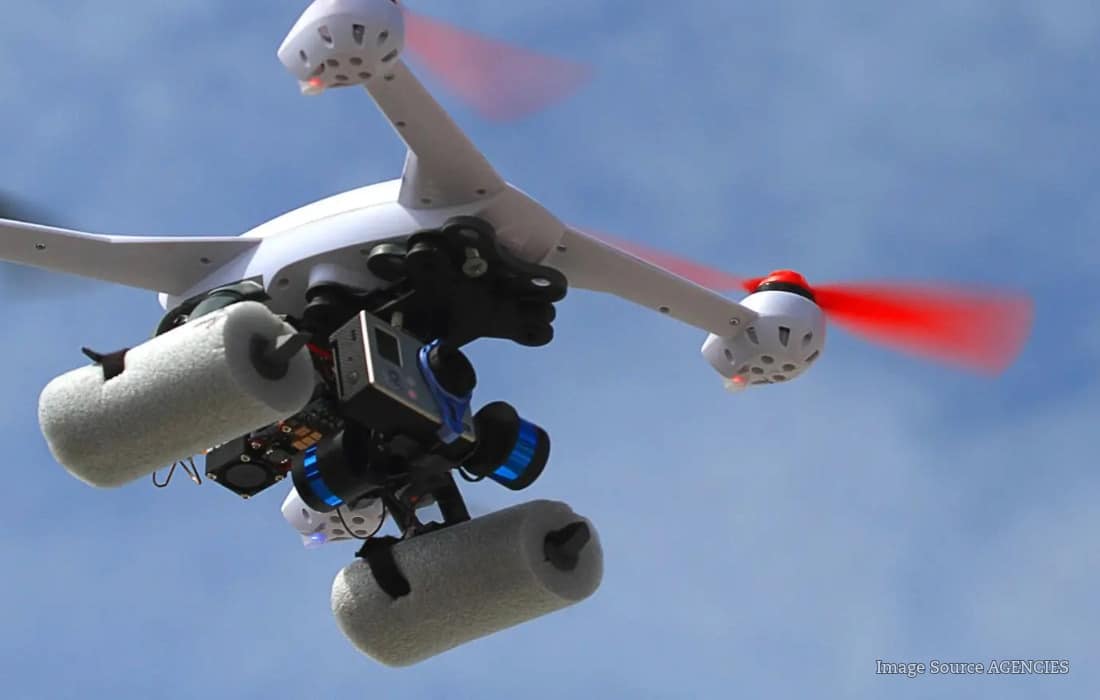
China has developed a military drone that can locate injured soldiers and inject emergency medication from a distance. The technology could help save lives when medical teams cannot safely reach wounded personnel
BEIJING: China has developed a military drone capable of locating wounded soldiers and delivering emergency medication directly into their muscles from a distance. Researchers at the country’s Air Force Medical University designed the technology to provide faster medical assistance in dangerous battlefield conditions.
The development could improve emergency treatment for injured military personnel, particularly when ongoing attacks prevent rescue teams from reaching them. Chinese state media reported the advancement on November 11.
How Does the Medical Drone Work?
The drone uses a dart-like delivery system to inject emergency medication into wounded soldiers without requiring medical personnel to approach them.
Wang Jianqi, a representative of China’s Air Force Medical University, explained that the technology could deliver life-saving medicine wherever the drone can fly. This approach could provide crucial treatment time before medical teams reach injured personnel. Footage broadcast by Chinese state television showed a drone releasing a medical projectile towards a person lying on the ground during a demonstration.
Improving Battlefield Emergency Care
Military analysts believe the technology could improve battlefield medical services by allowing injured soldiers to receive initial treatment in areas that remain too dangerous for conventional rescue operations. China has also been testing other unmanned medical systems, including drones that transport emergency supplies and robotic equipment that helps locate casualties. These technologies aim to reduce risks for medical personnel while improving response times during emergencies.
Impact to Expect
The innovation could eventually support civilian emergency services during natural disasters, floods and other situations where rescue teams struggle to reach injured people. However, the technology remains experimental, and researchers must address safety, accuracy and reliability before widespread deployment.
Further testing will determine whether remote medical injections can become a practical solution for emergency healthcare and battlefield rescue operations.
