
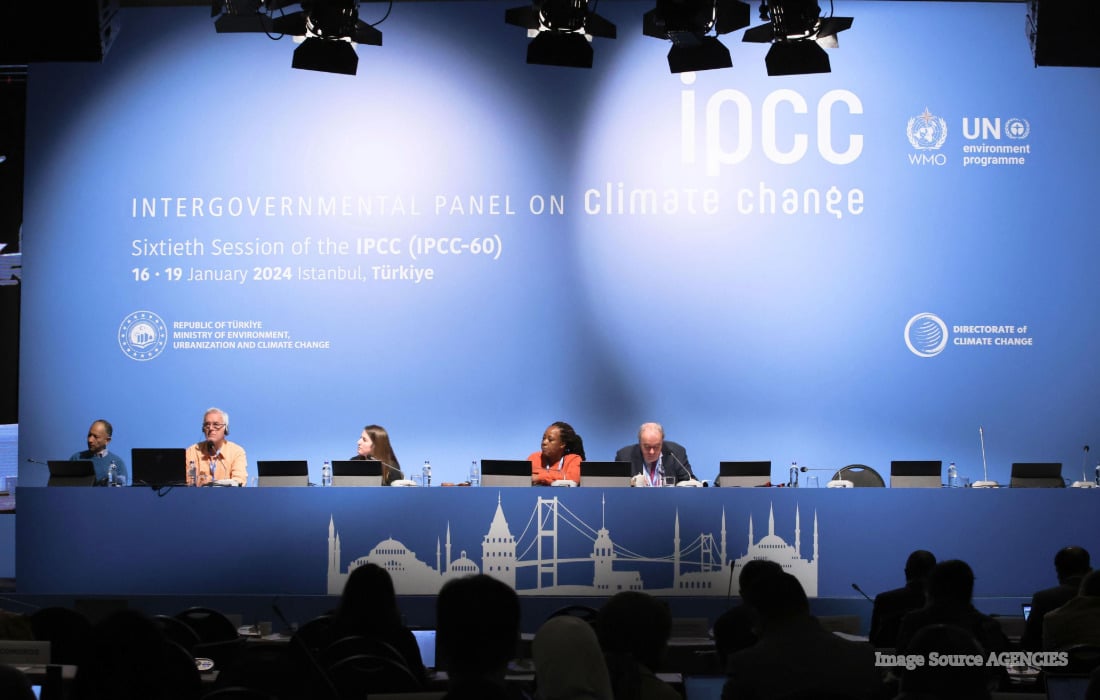
The Intergovernmental Panel on Climate Change (IPCC) faces a three-year deadlock over the publication schedule of its Seventh Assessment Report (AR7), potentially affecting critical climate negotiations in 2028.
Brussels/Singapore: The world’s leading climate science body faces a prolonged dispute over the release of its next major assessment, raising concerns that governments could enter crucial international climate negotiations without updated scientific findings.
The Intergovernmental Panel on Climate Change (IPCC), representing 195 countries, has spent nearly three years debating the publication timetable for its Seventh Assessment Report.
The disagreement centres on whether scientific assessments should be completed before the United Nations climate negotiations scheduled for November 2028.
Why countries disagree
Several developed countries and climate-vulnerable nations want the reports published by 2028 to inform international climate commitments.
However, countries including India, China, Russia and Saudi Arabia have supported extending the timetable into 2029.
Those favouring additional time argue that scientists from developing countries need adequate resources and opportunities to participate meaningfully in the assessment process.
Supporters of the earlier deadline warn that postponement could weaken science-based climate policymaking.
What will the reports cover?
The upcoming assessments will examine the causes of global warming, climate impacts, adaptation strategies and approaches to reducing greenhouse gas emissions.
They will also address climate finance and irreversible environmental damage, issues central to international negotiations.
Crucial meeting in Ethiopia
Representatives from IPCC member countries will meet in Addis Ababa, Ethiopia, from October 12 to 16, seeking agreement on the publication schedule.
Scientists have proposed completing the three principal assessments by September 2028, ahead of the next global review of progress under the Paris Agreement.
Failure to reach consensus could leave policymakers relying heavily on older assessments when negotiating future climate targets.
Impact to expect
Continued uncertainty over publication dates could complicate climate negotiations, emissions commitments and financial support for vulnerable nations.
