
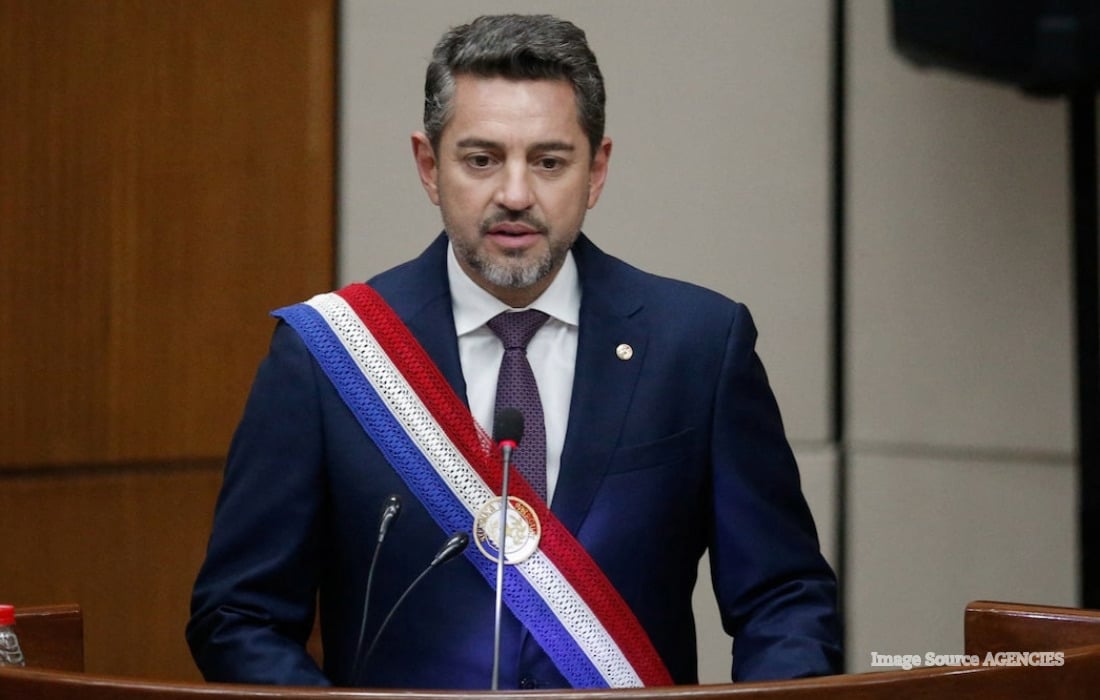
Paraguay has sworn in Pedro Alliana as president after lawmakers impeached Santiago Peña over a major banking scandal. Peña was placed under house arrest as authorities investigated alleged misconduct linked to the collapse of Ueno Bank
ASUNCION: Paraguay has sworn in Pedro Alliana as its new president following the impeachment of Santiago Peña. The dramatic leadership change came on November 6, amid a financial crisis triggered by the collapse of digital lender Ueno Bank.
Alliana, 52, previously served as vice president under Peña. He assumed office shortly after the Senate voted to remove his predecessor over alleged misconduct linked to the banking scandal. Of Paraguay’s 45 senators, 44 voted for Peña’s removal, while one abstained.
Santiago Peña placed under house arrest
Authorities placed Santiago Peña under house arrest shortly after his impeachment. Prosecutors are investigating possible offences, including influence peddling and breach of trust. Peña has denied wrongdoing and indicated that he will cooperate with investigators.
The former president had offered his resignation on November 5. However, lawmakers proceeded with impeachment rather than accepting his departure. Authorities also issued an arrest warrant for former central bank chief Carlos Carvallo. Investigators are examining possible failures in banking oversight.
Ueno Bank collapse sparks nationwide protests
The political crisis followed the collapse of Ueno Bank, which provided financial services to nearly half of Paraguay’s population. Millions of customers lost access to their accounts after the central bank intervened. The disruption affected savings and pension payments, triggering public protests.
Demonstrators demanded accountability and faster access to frozen funds. Authorities have introduced measures to protect depositors and limit wider financial instability.
Impact to Expect
The leadership change could reshape Paraguay’s political and financial outlook. President Alliana faces immediate pressure to restore banking services and public confidence. The ongoing investigation may also prompt closer scrutiny of financial regulation and government oversight.The crisis highlights the risks associated with weak banking supervision and political connections.
